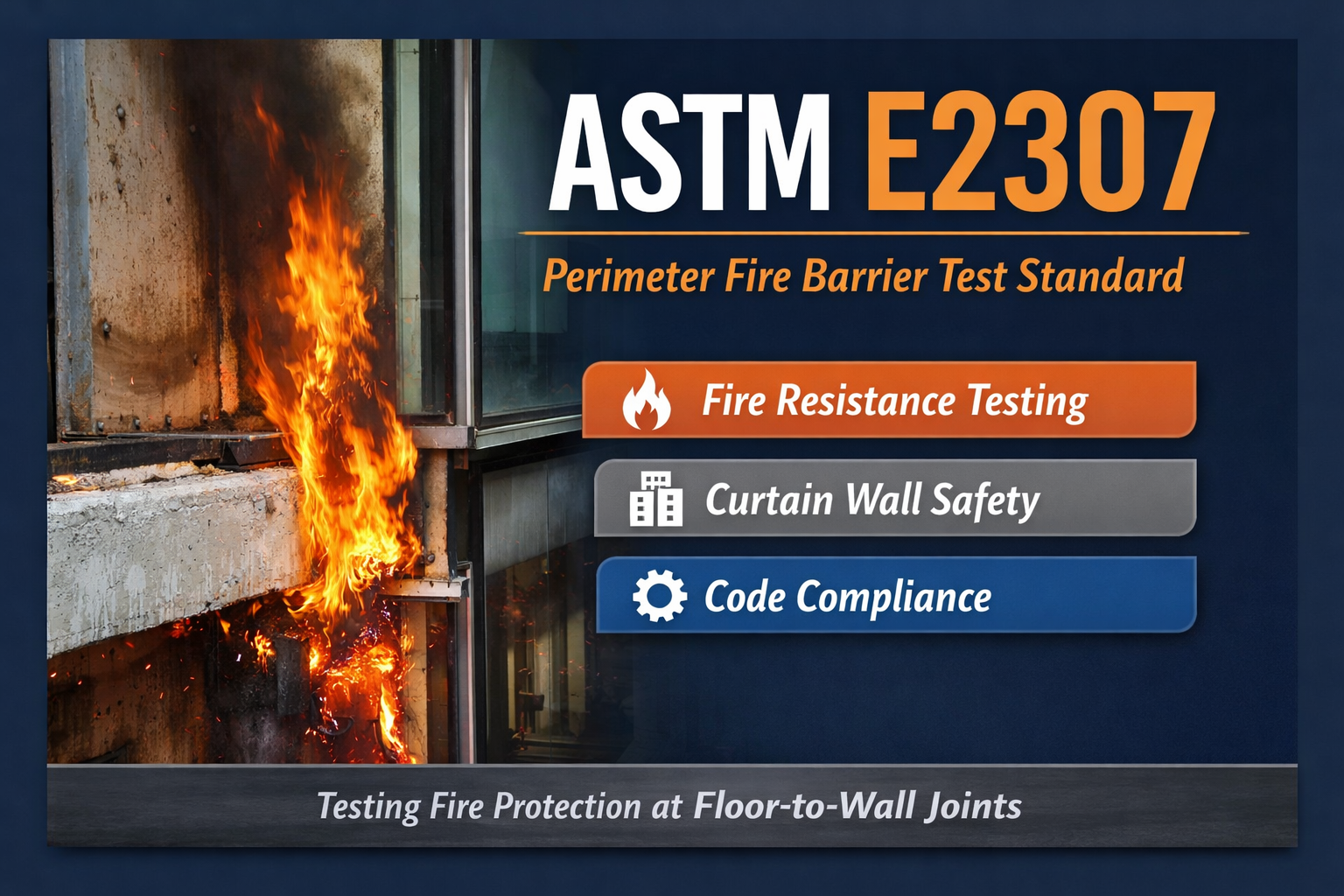
ASTM E2307 is an internationally recognized fire test standard developed by ASTM International to evaluate the fire resistance performance of perimeter fire barrier systems. These systems are installed at the junction where a floor slab meets an exterior wall or curtain wall, a critical location that can allow vertical fire spread if not properly protected. In modern high-rise buildings with extensive glass façades, ASTM E2307 plays a vital role in ensuring life safety, compartmentation, and code compliance.
Purpose of ASTM E2307
The primary objective of ASTM E2307 is to assess how effectively a perimeter fire barrier system can:
- Prevent the passage of flames and hot gases
- Limit temperature rise on the non-fire side
- Maintain integrity during a realistic multi-storey fire scenario
What Does ASTM E2307 Test?
ASTM E2307 evaluates the complete perimeter fire containment system, including:
- Fire-resistant insulation
- Safing materials
- Curtain wall or façade interface
- Attachment and support details
Applications of ASTM E2307
ASTM E2307 is commonly applied in:
- High-rise commercial buildings
- Residential towers
- Hospitals and institutional buildings
- Curtain wall and glazed façade systems
- Mixed-use developments