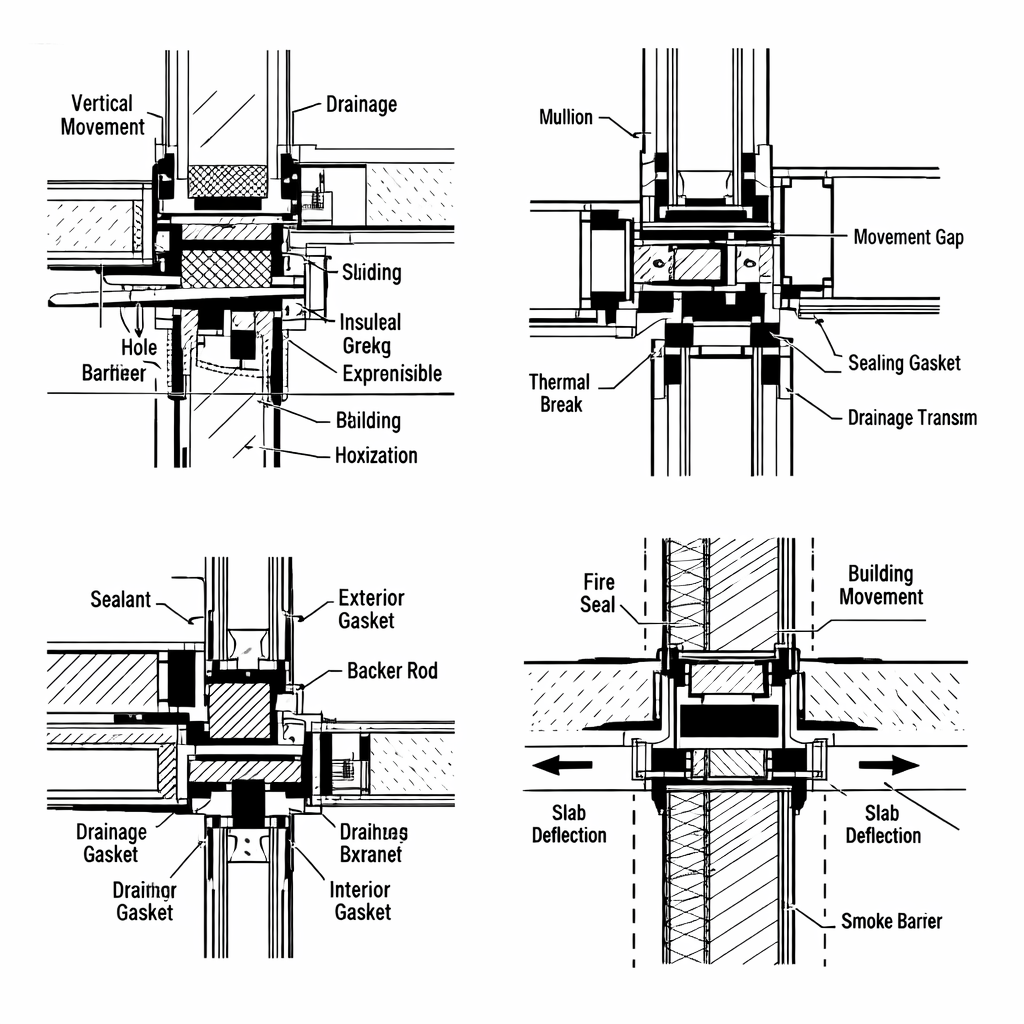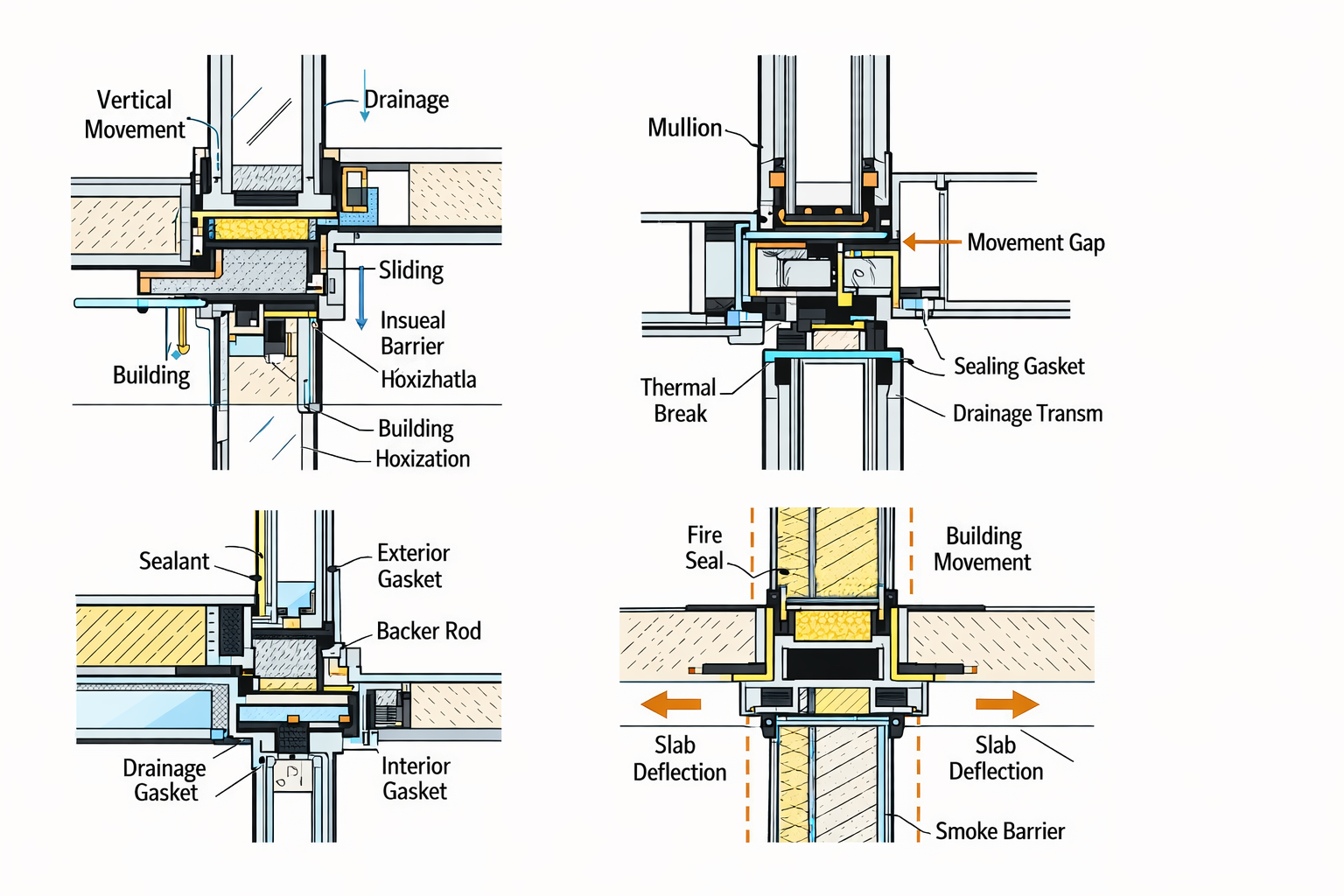
Design Challenges of Stack Joint in Façade Systems
A stack joint in façade systems—commonly used in high-rise curtain wall construction—is the horizontal joint between two vertically stacked façade units. While it allows installation floor by floor and accommodates structural movement, it presents several technical and performance challenges.
1. Structural Movement & Load Transfer
Buildings experience inter-storey drift, slab deflection, thermal expansion, and wind loads. A stack joint must:
Allow vertical and lateral movement
Prevent stress transfer to glass panels
Maintain alignment under seismic or wind pressure
Improper detailing may result in glass breakage, seal failure, or panel misalignment.
2. Air & Water Tightness
Maintaining weather performance at stack joints is critical. Challenges include:
Continuity of gaskets and sealants
Proper drainage paths
Preventing water ingress under negative pressure
Even minor execution errors can compromise façade performance, especially during heavy rain and high wind conditions.
3. Tolerance & Installation Accuracy
Construction tolerances in slab levels and embeds directly affect stack joint performance. Issues include:
Uneven slab edges
Misalignment between upper and lower units
Difficulty in maintaining uniform joint gaps
Precise measurement and adjustable anchoring systems are essential.
4. Fire & Acoustic Performance
Stack joints can become weak points in fire compartmentation. Proper fire-stopping materials and smoke seals must be integrated without affecting movement capability. Acoustic sealing is also necessary in high-rise residential or commercial projects.
5. Maintenance & Long-Term Durability
Sealants, gaskets, and fixings at stack joints are exposed to environmental stresses. UV exposure, temperature variation, and building movement can degrade materials over time, requiring periodic inspection and maintenance planning.
Conclusion
Stack joints are critical transition points in curtain wall façades. Their design demands a balance between flexibility, strength, weather resistance, and fire safety. Careful engineering, mock-up testing, and precise site execution are essential to ensure long-term façade performance.