What is edge Deletion in Single, Double, Silver Glass & why it is needed ?
Facademart.com
February 12, 2026
façadePVDF CoatingGloss Retention
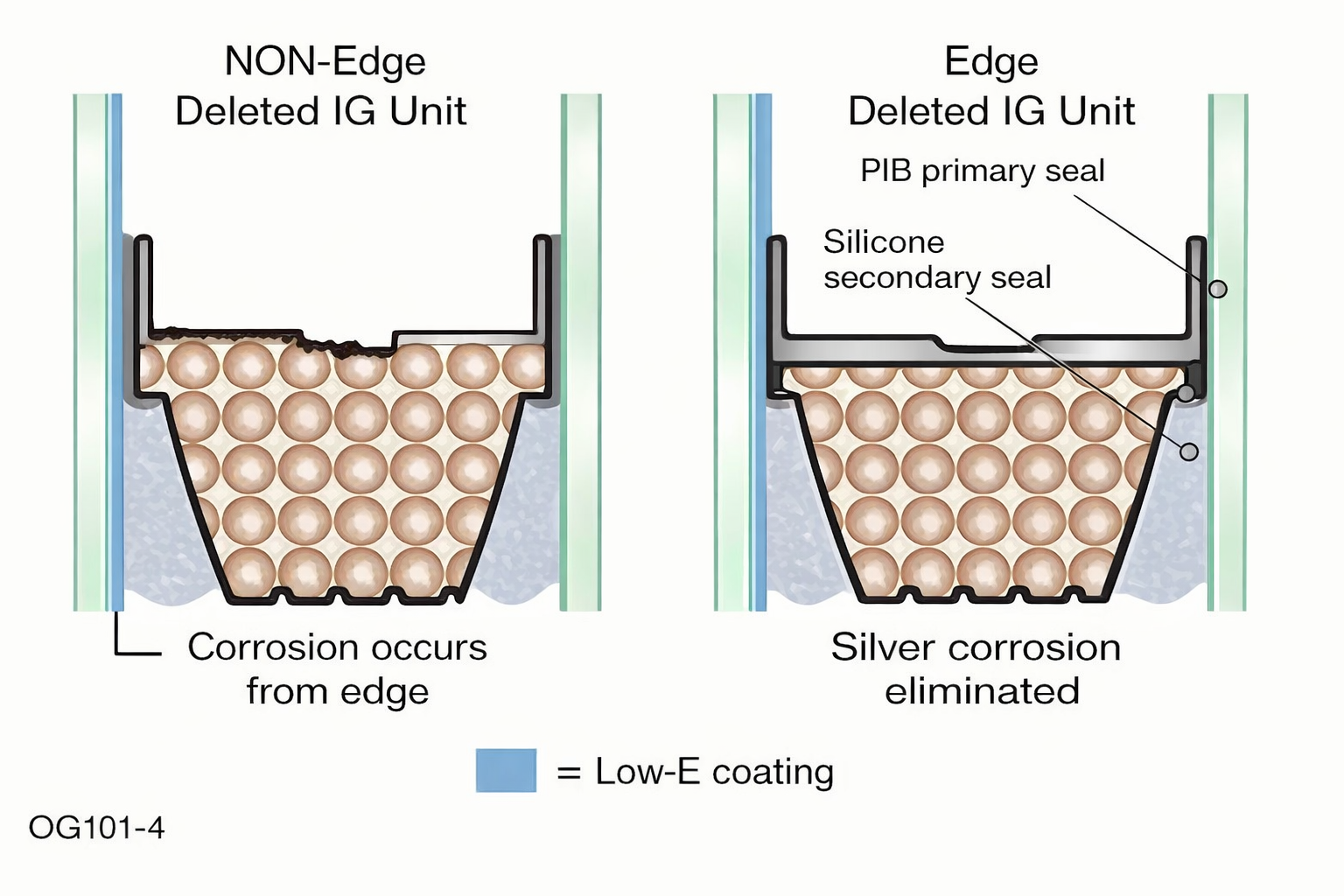
Edge Deletion is the process of removing the metallic or oxide coating from the perimeter of coated glass such as Low-E or solar control glass. This uncoated border ensures proper adhesion of sealants during Insulating Glass Unit (IGU) assembly and prevents coating corrosion or edge failure over time.
The procedure is guided by ASTM C1376, which defines coating durability, adhesion performance, and sealant compatibility requirements.
Typically, the deletion width ranges from 8–20 mm, depending on coating type:
Single Silver: 8–12 mm
Double Silver: 10–15 mm
Triple Silver: 12–20 mm
Deletion is carried out using mechanical grinding or laser ablation, followed by cleaning and inspection before IGU assembly.
Uniform edge deletion (±1 mm tolerance) is critical to ensure:
Strong sealant bonding
Long-term moisture resistance
Prevention of oxidation and delamination
Improved durability of high-performance glazing systems
In simple terms, edge deletion is a small but essential step that directly impacts the lifespan and performance of coated glass in façade applications.