Introduction
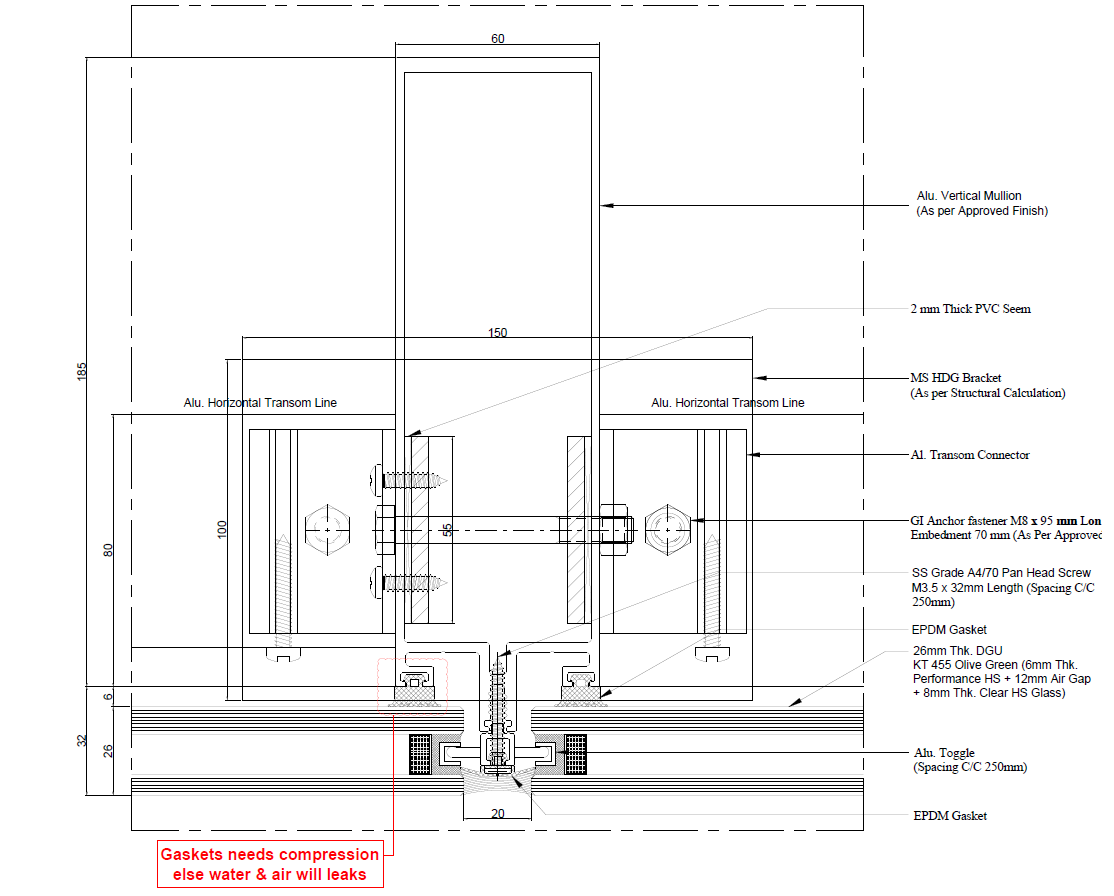
Gaskets are critical components in curtain wall and facade systems, serving as the primary barrier against water, air, and thermal infiltration. However, a gasket alone is not sufficient—it must be properly compressed to function effectively. Understanding why gasket compression is essential helps ensure long-term building envelope performance and occupant comfort.
This article explores the fundamental principles of gasket compression, the consequences of inadequate compression, and best practices for achieving optimal sealing performance in curtain wall installations.
What Are Gaskets in Curtain Wall Systems?
Gaskets are elastomeric seals—typically made from EPDM (Ethylene Propylene Diene Monomer), silicone, or neoprene—that are installed between glazing panels and aluminum framing members in curtain wall systems. They serve multiple critical functions:
- Creating a weathertight seal against water penetration
- Preventing air leakage and drafts
- Providing thermal insulation at the glass-to-frame interface
- Cushioning the glass to prevent direct glass-to-metal contact
- Accommodating thermal expansion and building movement
Modern curtain walls rely on gasket systems to meet stringent performance requirements for water resistance, air tightness, and energy efficiency.
Why Compression Is Critical
1. Creating an Effective Seal
Gaskets must be compressed to fill microscopic gaps and irregularities between the glass and frame surfaces. Without compression, even small air gaps can allow water and air to penetrate the building envelope. Compression forces the gasket material to conform to surface variations, creating a continuous, unbroken seal.
2. Maintaining Contact Pressure
Proper compression generates contact pressure between the gasket and adjacent surfaces. This pressure is essential for:
- Water resistance: Preventing capillary action and water migration
- Air tightness: Blocking air infiltration pathways
- Acoustic performance: Reducing sound transmission through gaps
3. Ensuring Recovery Force
Compressed gaskets generate a recovery force—the elastic pressure that pushes back against the surfaces. This recovery force maintains seal integrity even as materials expand and contract with temperature changes, or as the building experiences movement and deflection.
4. Thermal Performance
Properly compressed gaskets minimize thermal bridging at the glass-to-frame interface. Air gaps created by insufficient compression allow heat transfer, reducing the overall thermal performance of the curtain wall system and increasing energy costs.
What Happens Without Proper Compression
Water Leaks and Infiltration
Inadequately compressed gaskets are the leading cause of water leakage in curtain wall systems. Water can penetrate through gaps during wind-driven rain events, leading to:
- Interior water damage and staining
- Mold and mildew growth
- Corrosion of metal components
- Deterioration of insulation materials
- Costly remediation and repairs
Air Infiltration and Energy Loss
Uncompressed or poorly compressed gaskets allow air to leak through the building envelope. This results in:
- Increased heating and cooling loads
- Higher energy consumption and utility costs
- Uncomfortable drafts for building occupants
- Difficulty maintaining consistent indoor temperatures
- Reduced HVAC system efficiency
Thermal Bridging
Air gaps at the gasket interface create thermal bridges—pathways for heat transfer that bypass the insulation system. This leads to:
- Condensation on interior surfaces
- Cold spots and thermal discomfort
- Reduced overall R-value of the facade
- Failure to meet energy code requirements
Acoustic Performance Degradation
Sound transmission through unsealed gaps can significantly reduce the acoustic performance of curtain wall systems, particularly important in urban environments or near airports.
Proper Compression Requirements
Compression Percentage
Most gasket manufacturers specify an optimal compression range, typically:
- EPDM gaskets: 15-25% compression of original thickness
- Silicone gaskets: 20-30% compression
- Structural glazing gaskets: 25-35% compression
These ranges ensure adequate sealing pressure while avoiding over-compression that could damage the gasket or create excessive stress on the glass.
Compression Force
The compression force must be sufficient to:
- Overcome surface irregularities
- Maintain seal integrity under wind pressure
- Accommodate thermal movement
- Resist long-term compression set
Relevant Standards
Several standards govern gasket performance and compression requirements:
- ASTM C864: Specification for dense elastomeric compression seal gaskets
- EN 12365: Building hardware - Gasket and weatherstripping for doors, windows, shutters and curtain walling
- AAMA 800: Voluntary specifications and test methods for sealants
- CWCT: Centre for Window and Cladding Technology standards
Common Issues and Solutions
Issue 1: Under-Compression
Cause: Oversized gasket channels, incorrect gasket dimensions, or inadequate pressure plate installation.
Solution: Verify gasket and channel dimensions match design specifications. Ensure pressure plates are properly installed and torqued to manufacturer requirements.
Issue 2: Over-Compression
Cause: Undersized gaskets, excessive clamping force, or incorrect channel design.
Solution: Use gaskets sized according to manufacturer specifications. Avoid exceeding maximum compression limits. Monitor for signs of gasket extrusion or glass stress.
Issue 3: Uneven Compression
Cause: Warped frames, inconsistent pressure plate installation, or manufacturing tolerances.
Solution: Ensure frame straightness and proper alignment. Install pressure plates systematically with consistent torque. Use shims where necessary to achieve uniform compression.
Issue 4: Compression Set Over Time
Cause: UV exposure, thermal cycling, ozone degradation, or poor-quality gasket materials.
Solution: Specify high-quality gaskets with proven durability. Consider UV-resistant materials for exposed applications. Plan for periodic gasket inspection and replacement.
Best Practices for Installation
1. Follow Manufacturer Specifications
Always adhere to gasket manufacturer recommendations for compression percentage, installation procedures, and compatible materials. These specifications are based on extensive testing and field experience.
2. Verify Dimensions Before Installation
Measure gasket channels and verify gasket dimensions before installation. Ensure compatibility between gasket size and channel geometry to achieve target compression.
3. Use Proper Installation Tools
Employ appropriate tools for gasket installation:
- Torque wrenches for consistent pressure plate tightening
- Gasket insertion tools to avoid damage during installation
- Compression measurement gauges to verify proper compression
4. Install Systematically
Follow a systematic installation sequence:
- Clean all surfaces thoroughly
- Insert gaskets without stretching or twisting
- Install pressure plates progressively from center outward
- Torque fasteners to specified values
- Verify compression at multiple points
5. Conduct Quality Control Checks
Implement quality control procedures:
- Visual inspection for proper gasket seating
- Compression measurement at representative locations
- Water testing to verify seal integrity
- Documentation of installation parameters
6. Consider Environmental Conditions
Account for temperature during installation. Gaskets installed in cold conditions may require different compression than those installed in warm conditions due to thermal expansion effects.
Long-Term Performance Considerations
Material Selection
Choose gasket materials appropriate for the application:
- EPDM: Excellent weather resistance, good compression set resistance, cost-effective
- Silicone: Superior temperature range, excellent UV resistance, higher cost
- Neoprene: Good general-purpose performance, moderate weather resistance
Maintenance and Inspection
Establish a maintenance program that includes:
- Periodic visual inspection of gaskets
- Assessment of compression set and recovery force
- Water testing after major weather events
- Planned gasket replacement based on service life
Design for Replaceability
Specify gasket systems that allow for replacement without complete disassembly of the curtain wall. This facilitates maintenance and extends the service life of the facade system.
Conclusion
Gasket compression is not merely a detail—it is fundamental to the performance of curtain wall systems. Proper compression ensures effective sealing against water, air, and thermal infiltration, protecting building occupants and preserving the integrity of the building envelope.
By understanding the principles of gasket compression, recognizing the consequences of inadequate compression, and following best practices for installation and maintenance, facade professionals can deliver curtain wall systems that perform reliably for decades.
As building codes become more stringent and energy efficiency requirements increase, the importance of proper gasket compression will only grow. Investing in quality materials, proper installation, and ongoing maintenance ensures that curtain wall systems meet performance expectations and provide lasting value.