Facades are evolving from envelopes to iconic design elements.
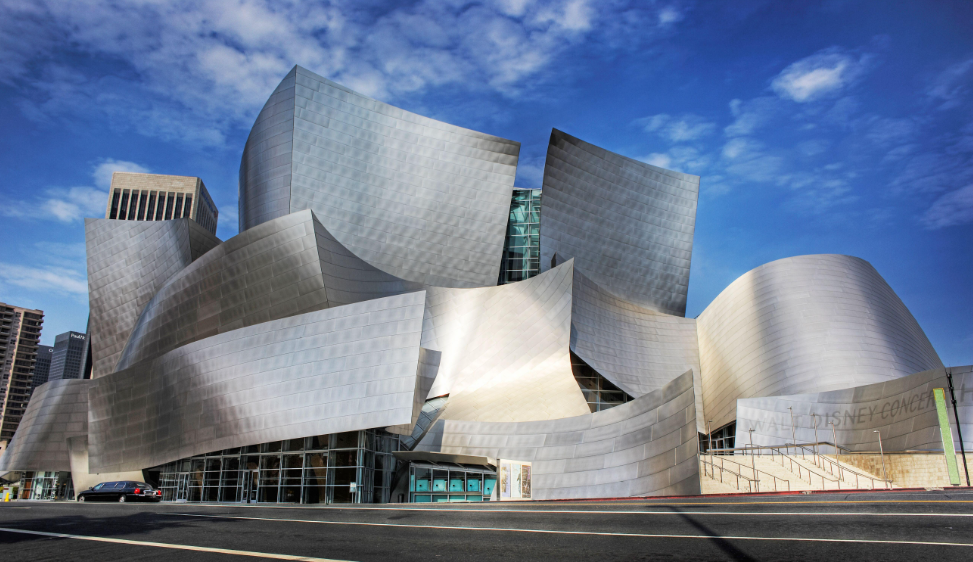
Walt Disney Concert Hall, Los Angeles, California, by architect Frank Gehry.
In 2026, the role of building facades has undergone a fundamental transformation. No longer limited to acting as passive envelopes that protect interiors from external conditions, facades have emerged as powerful, expressive, and performance-driven elements that define the identity of modern architecture. Across global cities, the building exterior is increasingly the focal point—where aesthetics, sustainability, and technology converge to create iconic design statements.
From Static Skins to Intelligent Systems
Traditionally, facades functioned as protective barriers—regulating light, air, and weather. Today, they are being reimagined as dynamic, responsive systems. Contemporary facade designs act like a “building’s nervous system,” sensing environmental changes and responding in real time through adaptive shading, ventilation, and energy control.
This shift is driven by the demand for high-performance buildings. Facades now actively manage heat, daylight, and airflow, reducing energy consumption significantly—sometimes by up to 40%. The envelope has evolved into a functional interface between architecture and climate, rather than a static boundary.
The Rise of Iconic Identity
In the current architectural landscape, facades are no longer secondary to form—they are the form. Architects are using them as tools of expression, crafting bold geometries, textures, and patterns that transform buildings into urban landmarks.
Parametric design, AI-generated geometries, and large monolithic panels allow unprecedented creative freedom, resulting in facades that are sculptural and instantly recognizable. At the same time, mixed-material layering—combining glass, metal, stone, and timber—adds depth and visual richness, giving buildings a unique character.
Color, too, plays a critical role. Facade palettes in 2026 are used deliberately to communicate identity, emotion, and brand value, reinforcing the idea that the exterior is an architectural narrative rather than just a surface.
Sustainability as a Design Driver
One of the most significant forces behind this evolution is sustainability. Facades are now central to achieving net-zero and low-energy buildings. In India and globally, projects increasingly incorporate double-glazed systems, solar-integrated facades, and recyclable materials to reduce environmental impact.
Building-integrated photovoltaics (BIPV) are turning facades into energy generators, while circular materials like aluminum and engineered glass support low-carbon construction. This convergence of sustainability and design ensures that facades are not only visually iconic but also environmentally responsible.
Technology and Precision Shaping the Future
Digital tools such as 3D scanning, parametric modeling, and “digital twin” technologies are enabling architects to push the boundaries of facade design with precision. Complex geometries that were once difficult to construct are now achievable with high accuracy and efficiency.
Additionally, smart facades equipped with sensors and automation systems can adjust in real time to changing weather conditions, enhancing occupant comfort while optimizing building performance.
Beyond Buildings: Experiential and Cultural Impact
Facades are increasingly shaping how people experience cities. Installations and architectural showcases—such as those seen during major design events in 2026—highlight how exterior design can create emotional, interactive, and cultural engagement, transforming buildings into public experiences rather than static objects.
This aligns with broader research indicating that facade design directly influences human perception, mood, and urban identity, reinforcing their importance beyond technical performance.
Conclusion
As of April 2026, facades have decisively moved beyond their traditional role as building envelopes. They are now multifunctional, expressive, and intelligent systems—simultaneously managing energy, defining aesthetics, and shaping urban identity.
In this new paradigm, the facade is no longer just the face of a building—it is its voice, performance engine, and signature, making it one of the most critical elements in contemporary architecture.