Kinetic Facades: Maximizing Energy Capture Through Dynamic Design
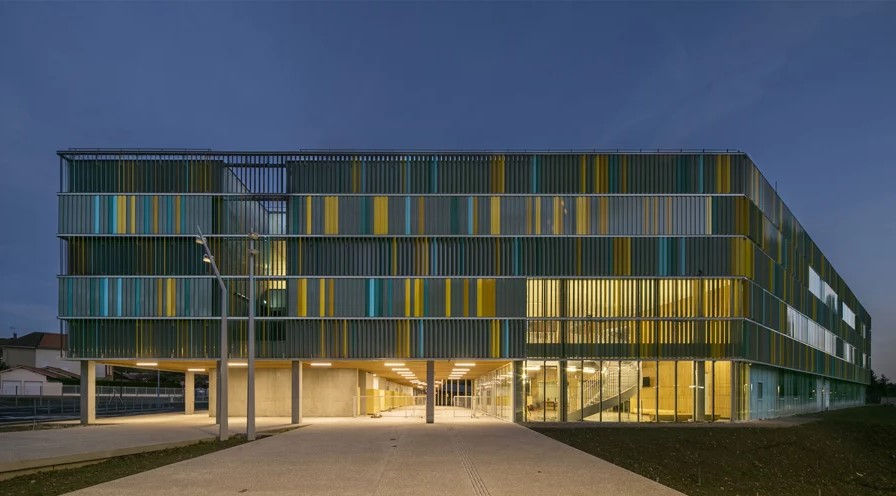
Kinetic facade at the Collège Champier, France, by CoCo architecture & Jean de Giacinto
In the evolving landscape of sustainable architecture, kinetic facades are emerging as one of the most advanced solutions for energy efficiency and climate-responsive design. Unlike conventional static building envelopes, kinetic facades incorporate moving components—such as panels, louvers, or screens—that adjust in real time to environmental conditions. This dynamic behavior allows buildings to actively maximize energy capture, regulate heat gain, and enhance occupant comfort, transforming the facade into a high-performance system.
What Are Kinetic Facades?
Kinetic facades are building exteriors designed with mechanically or digitally controlled elements that can change position, orientation, or configuration. These movements are typically driven by sensors, automation systems, or algorithms that respond to sunlight, temperature, wind, and occupancy patterns.
Instead of passively receiving environmental forces, the facade becomes interactive, constantly optimizing its performance throughout the day.
Maximizing Solar Energy Capture
One of the most significant advantages of kinetic facades is their ability to optimize solar exposure. Traditional facades often face a trade-off between daylight and heat gain. Kinetic systems resolve this by dynamically adjusting their geometry.
Solar Tracking: Panels rotate or tilt to follow the sun’s path, maximizing exposure for integrated photovoltaic systems.
Adaptive Shading: Louvers open to allow daylight while minimizing glare and overheating.
Energy Harvesting: Building-integrated photovoltaics (BIPV) embedded within moving panels generate electricity more efficiently when aligned with solar angles.
This adaptability can significantly improve a building’s overall energy performance, especially in regions with high solar intensity.
Thermal Performance and Energy Savings
Kinetic facades play a crucial role in reducing cooling and heating loads. By controlling how much solar radiation enters the building, they help maintain stable indoor temperatures.
During peak sunlight, shading elements close or tilt to block excessive heat.
In cooler conditions, they open up to allow passive solar heating.
This continuous adjustment reduces reliance on HVAC systems, leading to lower operational energy consumption and improved sustainability metrics.
Design Innovation and Aesthetic Impact
Beyond performance, kinetic facades introduce a new dimension of architectural expression. Buildings with moving exteriors appear alive and ever-changing, creating visually striking identities.
A well-known example is the Al Bahr Towers, where a responsive shading system inspired by traditional mashrabiya screens opens and closes throughout the day. This not only reduces solar gain but also creates a distinctive visual rhythm across the facade.
Such designs demonstrate how technology and cultural inspiration can merge to produce facades that are both functional and iconic.
Integration of Smart Technologies
Modern kinetic facades rely heavily on automation and smart control systems:
Sensors monitor sunlight intensity, temperature, and wind conditions.
AI algorithms predict environmental changes and adjust facade behavior proactively.
Building management systems (BMS) integrate facade performance with lighting and HVAC systems.
This interconnected approach ensures that the facade contributes holistically to building efficiency.
Challenges and Considerations
Despite their advantages, kinetic facades come with certain complexities:
Higher initial costs due to mechanical systems and advanced materials
Maintenance requirements for moving parts
System reliability in extreme weather conditions
However, as technology advances and costs decrease, these challenges are becoming more manageable, making kinetic systems increasingly viable for mainstream construction.
The Future of Dynamic Building Envelopes
As cities push toward net-zero energy goals, kinetic facades are expected to play a central role in sustainable architecture. Their ability to adapt, perform, and generate energy positions them as a key innovation in the transition from static buildings to responsive environments.
In essence, kinetic facades redefine the building envelope—not as a barrier, but as an active energy interface that continuously interacts with its surroundings to optimize performance and design.